


The size of solar system your home can connect without waiting is set by your electricity supply as well as your roof. On a single-phase supply, the line for connecting first and telling the network operator afterwards is 3.68 kW for everything that can export, battery included. On three-phase it is 11.04 kW. Larger systems need the network operator’s agreement first.
That is the short answer. The rest of this guide explains where the numbers come from, how to find out which supply you have, and what changes when the right system for your house is bigger than the line.
Do I have a single-phase or three-phase supply?
Your supply is the cable that comes in from the street, through the main fuse, to your meter. A single-phase supply brings power in on one live conductor; a three-phase supply brings it in on three. You can’t always tell by looking, so ask. An installer can confirm it at the meter position, and the company that runs your local network holds the record for the address.
That company is your network operator, often called the DNO, and it is not your energy supplier. The Energy Networks Association, the body for the companies that run the wires, puts it plainly: network operators connect your home to electricity and fix power cuts that aren’t caused by a problem inside it, while your supplier is the company you pay for the electricity you use. The ENA’s website shows which network operator serves your postcode. Checked on 25 Nov 2026.
How big a system can a single-phase supply take?
In Great Britain, small generators connect under a set of rules called EREC G98. They cover equipment up to and including 16 amps per phase, which the ENA’s Distributed Generation Connection Guide (March 2025) puts at 3.68 kW on a single-phase supply and 11.04 kW on a three-phase supply. The figure is the total for the premises, not for each item, so two inverters on one house share one allowance. Checked on 25 Nov 2026.
Under G98 you don’t need to contact the network operator before the work. The installer must tell it about the installation within 28 days of commissioning, using the installation document set out in G98. That is why most small home systems go in without a wait. Checked on 25 Nov 2026.
The line is about what the equipment can put out, which in practice means the inverter’s rating. The panels on the roof can add up to more than that, because they rarely all reach their full rating at once. Our guide to how many solar panels you need shows how the array and the inverter are sized against each other.
Does a battery count towards the limit?
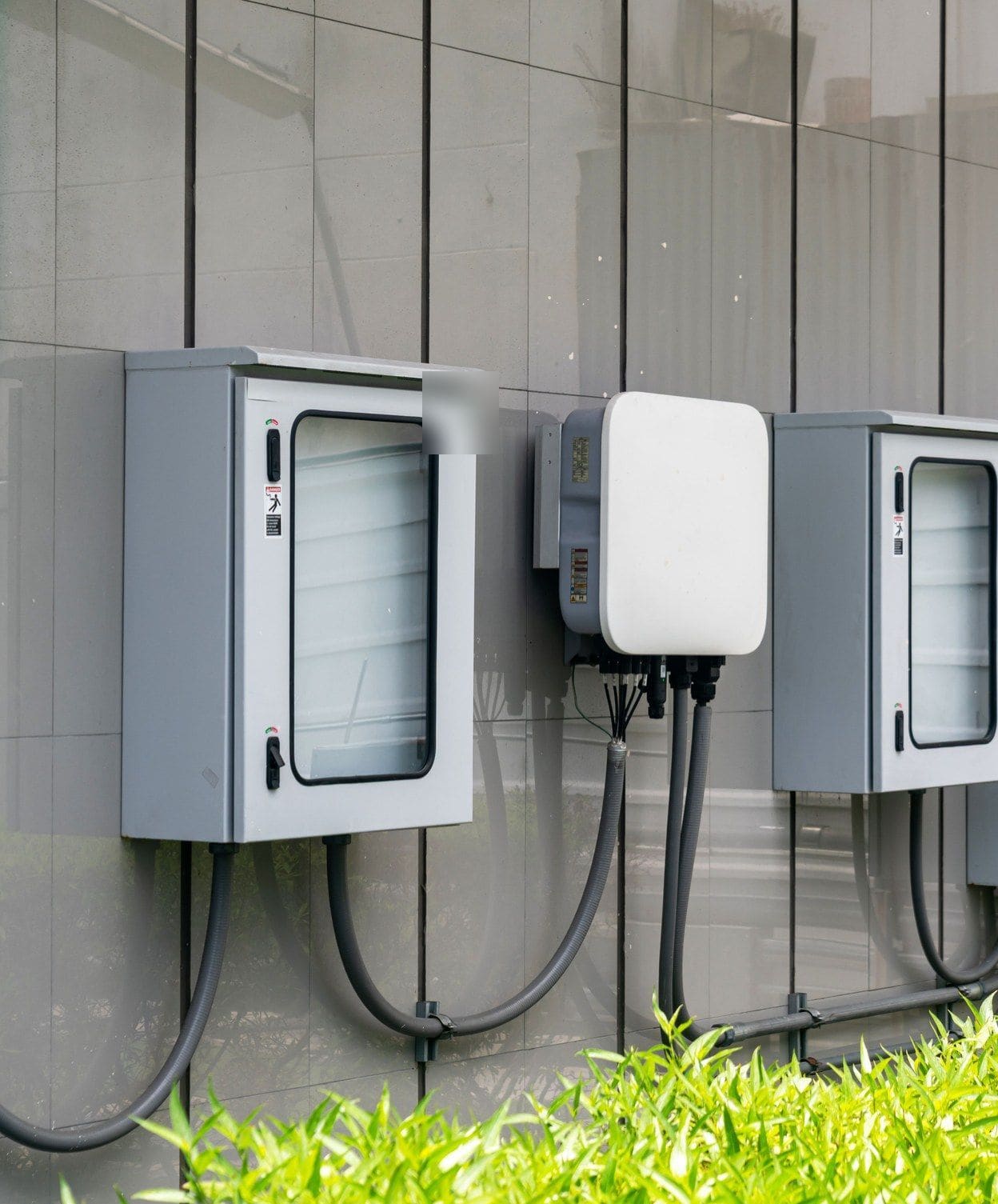
Yes. G98’s definition of a micro-generator includes electricity storage devices, and the ENA guide notes that electricity storage is classed in GB law as a form of generation. A battery that can send power back out counts towards the same 16 amps per phase as the solar inverter. Checked on 25 Nov 2026.
This catches people out when they add a battery to panels they already have. A system that sat under the line on its own can go over it once a battery with its own inverter joins it. A hybrid inverter runs the panels and the battery from one box, so there is one rating to count rather than two. That is one reason the inverter is best chosen with a likely battery in mind, and the solar battery cost page shows what a battery adds to the price both ways.
What happens if the right system is bigger than the limit?
Then it connects under EREC G99 instead. For a home system above 16 amps per phase, the ENA guide sets out the steps: your installer submits an application form to the network operator, the network operator makes a connection offer, and once you accept it, the work can begin. It adds time to the job, but it is a normal part of it, and it is better than shrinking a system that suits the house just to stay under a line. Checked on 25 Nov 2026.
There is a second route. An export limitation scheme lets a larger system connect while capping what it can send to the grid at any moment. The ENA says these schemes must comply with EREC G100, the standard for customer export and import limiting schemes. The network operator still decides what it will accept, so the cap is agreed, not assumed. Checked on 25 Nov 2026.
Northern Ireland has different connection arrangements, with its own versions of G98 and G99, so the figures in this guide apply to Great Britain. Checked on 25 Nov 2026.
Can a shared or looped supply hold things up?
Sometimes. Some older homes share a service cable with the house next door, an arrangement known as a looped supply. The ENA guide lists small service cables and looped services among the conditions that can point to a supply upgrade when a home takes on more load. Checked on 25 Nov 2026.
That work belongs to the network operator, not the installer, so it needs to be known early. Electrical Exchange, an electrician in Dorset, explains how a looped supply can hold up an EV charger or a battery, and the same question is worth asking before solar goes onto a house that shares its cable.
The same goes for what you plan to add later. An electric car charger or a heat pump draws far more than most household appliances, and it changes what the supply has to carry. If either is coming, our guide to planning for a car or a heat pump shows how it changes the array and the inverter.
What should I ask before the quotes arrive?
A few questions settle most of this before anyone climbs a ladder:
- Is the supply single-phase or three-phase, and does the house share its service cable with a neighbour?
- Will the system, with any battery, go over the G98 line? If so, who applies under G99, and how long is allowed for it?
- Is an export limit proposed, and has the network operator agreed it?
- Who tells the network operator once the system is commissioned, and will you get a copy?
The answers belong on the quote, in writing, next to the make and model of the inverter.
What we do
We don’t install. Give us a postcode and your yearly bill, and we read the roof from above, size the array to the house and the grid connection, and price it with and without a battery. If the right system for your house is bigger than the G98 line, the estimate says so and allows time for the application rather than shrinking the array to dodge it.