


Money · 5 min read
Export payments, in plain English
How the Smart Export Guarantee works, what has to be in place before payments start, and why part of a solar saving is export income.
Read the guide
Your estimate
Give us a postcode and we read the roof from aerial imagery, size an array to fit it and price it with a battery and without one. Every assumption behind the numbers is on this page, and the survey then checks each figure.
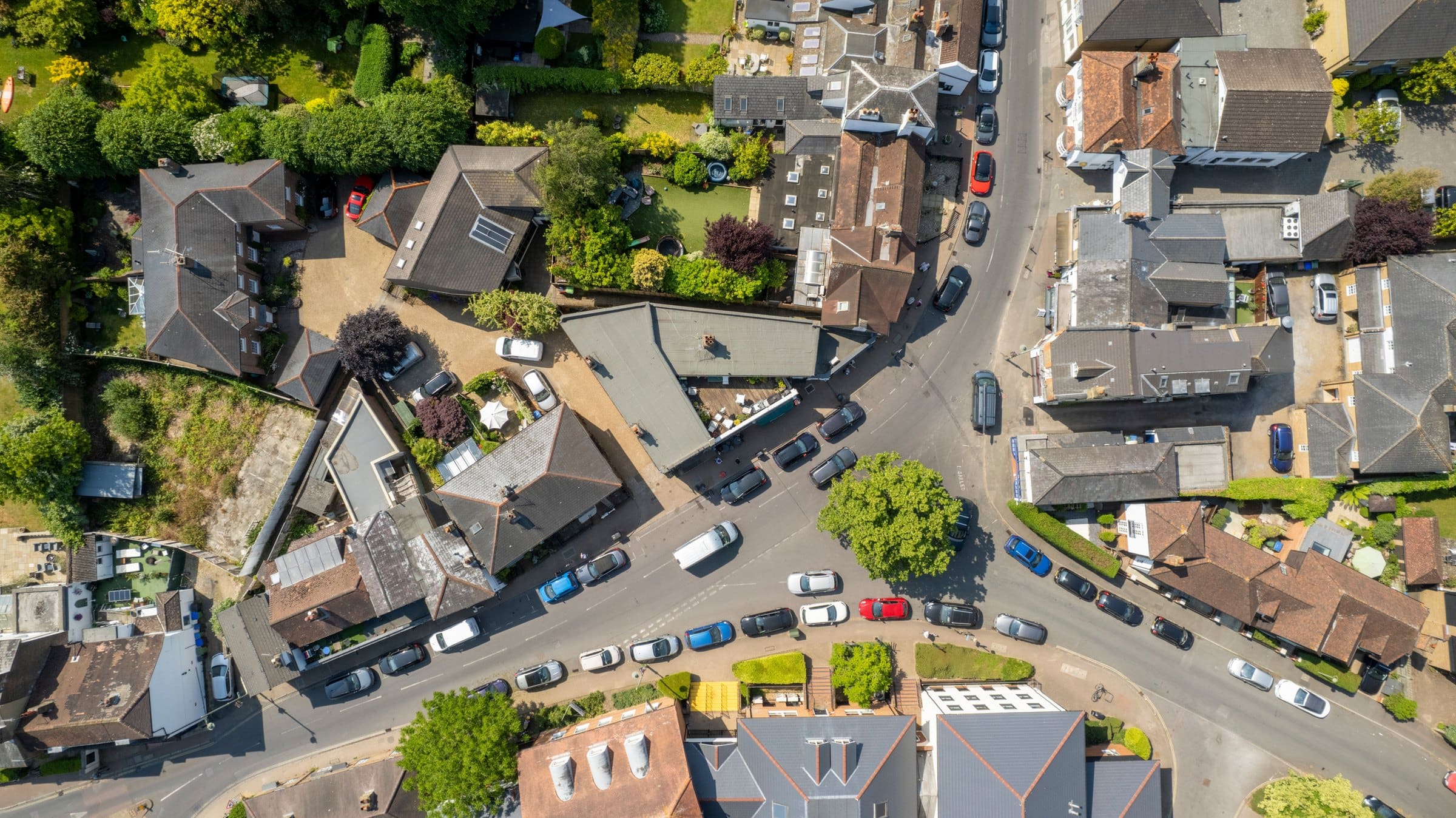
Read from above
Aerial imagery gives us most of what a survey used to start with. We read it before anyone books a visit, so the visit checks our numbers instead of opening a sales conversation.
From roof to price
Each number rests on the one before it. Change an input and everything after it moves.
The usable area, less what the array must clear, sets how many panels fit: 14 × 445 W on the example roof, a 6.2 kWp array.
Pitch, orientation, shading and local sunshine set the yearly output: about 5,400 kWh from around 1,640 hours of sunshine on the example roof.
We take your yearly bill, remove the standing charge and divide by the unit rate. A £1,500 bill at 30p a unit with a £210 standing charge is about 4,300 kWh.
We work through the year month by month, setting what the roof makes against when the home uses power. On the example estimate the home uses 28 per cent of what the roof makes as it’s made, or 48 per cent with a battery.
The system is priced against the market: £7,200–£8,900 installed on the example estimate, or £11,700–£13,400 with a 10 kWh battery.
Units you no longer buy plus units you export give the yearly saving. Set against the installed price, that gives payback: about seven years without a battery, about ten with one.
Example estimate · EX4
What we read from above tells us the array the roof can carry, what it should generate, what it costs installed and when it pays back. Part of the saving comes off your bill and part is paid to you for what you export, so we show the two apart. Add a battery and you’ll see which lines move. The survey checks the roof figures and the price; the saving depends on your tariff and how you use power.
About 4,300 kWh a year, at 30p a unit on a £210 standing charge, with export paid at 16p. Tariffs and export rates vary by supplier.
Payback
What the example roof saves each year covers what it cost installed in about seven years without a battery, about ten with one, if tariffs and use stay as assumed. After that the saving keeps coming, less upkeep such as a replacement inverter.
Power your roof makes while you’re using it, at the price you would have paid.
What you don’t use goes to the grid, paid at your export rate.
How much of the roof’s power you use, and a battery. These figures assume 30p a unit and 16p for export; both vary by supplier.
The range
An estimate is drawn from the air, and some of what sets the final price can only be seen up close. The rafters may need extra fixings. The consumer unit may need work before it can take the solar circuit. The covering may be harder to fix to than it looked. That is why the estimate gives a range.
The survey is where the range meets the house. The surveyor checks the rafters, the covering and the consumer unit, and explains anything that could move the price before they leave. Until then, we count payback against the middle of the range, so a price near the top pays back a little more slowly.
What the survey checks
Every assumption
These are the numbers behind every figure above, for the example roof. Move the bill or add the battery and they stay the same; only the results change.
What the roof makes, month by month
Copies the ten figures above, as they stand now, to paste anywhere.
Your estimate · questions
System size, panels, roof area, energy output, sunshine, self-use, the installed price, payback, the yearly saving and the battery. Each is drawn for your roof. The survey checks the roof figures and the price; the saving and payback depend on your tariff and how you use power.
Your bill tells us roughly how many units the house uses a year. That decides how much of the roof’s output you can use at home, which sets the saving and the payback.
Yes. If the numbers don’t work for your roof, your estimate will say so.
No. It is a set of numbers, not a contract. The next step is a survey, and nothing is signed on that day either.
From the guides
Every guide explains one part of the job in plain English.
Money · 5 min read
How the Smart Export Guarantee works, what has to be in place before payments start, and why part of a solar saving is export income.
Read the guideYour roof · 5 min read
The six things we read from above before anyone visits, how each one shapes the estimate, and what only a survey can see.
Read the guide
Battery · 5 min read
Where your units go by the hour, how tariffs and export rates change the sums, and one roof priced with and without a battery.
Read the guideKeep reading
Roof, loft and meter, checked on site
Priced both ways, side by side
Savings, mortgage or a loan
Estimate or survey
Our estimate is free. If you proceed to survey, our partner installer invoices you directly; we receive a referral fee from them, never from you, and it never affects which installer we introduce.
We use these details only to send your estimate and arrange a survey. Privacy Policy
This form needs JavaScript switched on.
Or ring us free on 0800 593 0413