



Solar panels · Exeter
Solar panels in Exeter, sized from above.
Solar panels in Exeter start with the roof, not a salesman. Give us a postcode and we read the pitch, the facing and the shade from aerial imagery, size an array for it, price it with a battery and without one, and introduce one installer who clears our seven checks. Our example estimate is an Exeter semi, so the numbers on this site already speak the city’s roofs.
- What a south-facing roof makes
- 1,050 kWh per kWp a year
- Homes with solar, 2025
- 5,911 systems
- Conservation areas
- 20
- Network operator
- National Grid (South West)
Exeter · the local picture
Exeter’s roofs: terraces, slate and twenty conservation areas.
Exeter is a compact city with a lot of Victorian and Edwardian terrace and semi-detached stock around the centre — Heavitree, St Leonards, St Thomas, Pennsylvania, Mount Pleasant — with post-war and newer estates towards the ring road and the edges of the city. Much of the older stock is slate-roofed, which changes the fixing (slates are lifted and flashed around each hook) but not whether the roof suits solar. Our guide to slate, tile and flat roofs explains what the covering does to the price.
The city council lists twenty conservation areas, including Heavitree, St Leonards, St Davids, Pennsylvania, Topsham, Alphington, Exwick and the central area. Solar panels on the roof slope of a house are permitted development in a conservation area as they are anywhere else; what the conservation rules restrict is panels on a wall, balcony or roof enclosure fronting a highway, a flat-roof array (which needs the council’s prior approval), and any listed building, which needs consent. An Article 4 direction can remove the right on particular streets. We check the address against the council’s conservation area map before the estimate, so a planning question is raised at the start, not at survey.
House prices put a scale on the decision. The Land Registry’s July 2026 index gives an average Exeter price of £282,696, with terraced homes at £282,887, semi-detached at £346,054 and detached at £517,757. A well-sized system on a semi in that band is a small fraction of the asset it sits on, and the saving it makes is set by the household’s bill, not by the value of the house.
Exeter City Council declared a climate emergency in 2019 and adopted the Net Zero Exeter 2030 Plan. The council’s own net-zero risk register acknowledges the 2030 target may prove too ambitious. For a homeowner it means two things: rooftop solar is the one part of the plan an individual household can deliver on its own, and the council’s planning service is used to the question.
Slate, tile or flat: what the covering changesExeter · the roofs
What an Exeter roof actually makes, and what the city has fitted.
The European Commission’s PVGIS model gives a south-facing Exeter roof at a 35° pitch about 1,050 kWh a year for every kWp installed, after typical system losses: around 125 kWh per kWp in June and 35 kWh in December. A clear south-facing 6.2 kWp array would make roughly 6,500 kWh a year on that yield. Our example estimate, a semi facing S–SW with some shade, is sized at 5,400 kWh — the difference between a textbook roof and a real one is exactly what the aerial reading is for.
Government statistics (DESNZ, Renewable electricity by local authority, published September 2026) count 5,911 solar PV systems in the Exeter local authority area at the end of 2025, up from 3,057 at the end of 2020, with 27.02 MW of capacity between them. Against an estimated 52,500 households that is roughly one home in nine with panels, and an average of about 4.6 kW per system, which is a typical house-sized array. Exeter has nearly doubled its solar in five years without the roofs changing; what changed is the price of electricity.
That history matters for an estimate. Installers who work Exeter have fitted thousands of these roofs, so the fixing, the scaffold and the paperwork are routine. It also means your neighbours’ arrays are a fair guide to what fits: a street of terraces with 8-panel arrays on the rear slope is telling you something about the usable area before we read it from above.
Size and price your roof with the solar panel calculator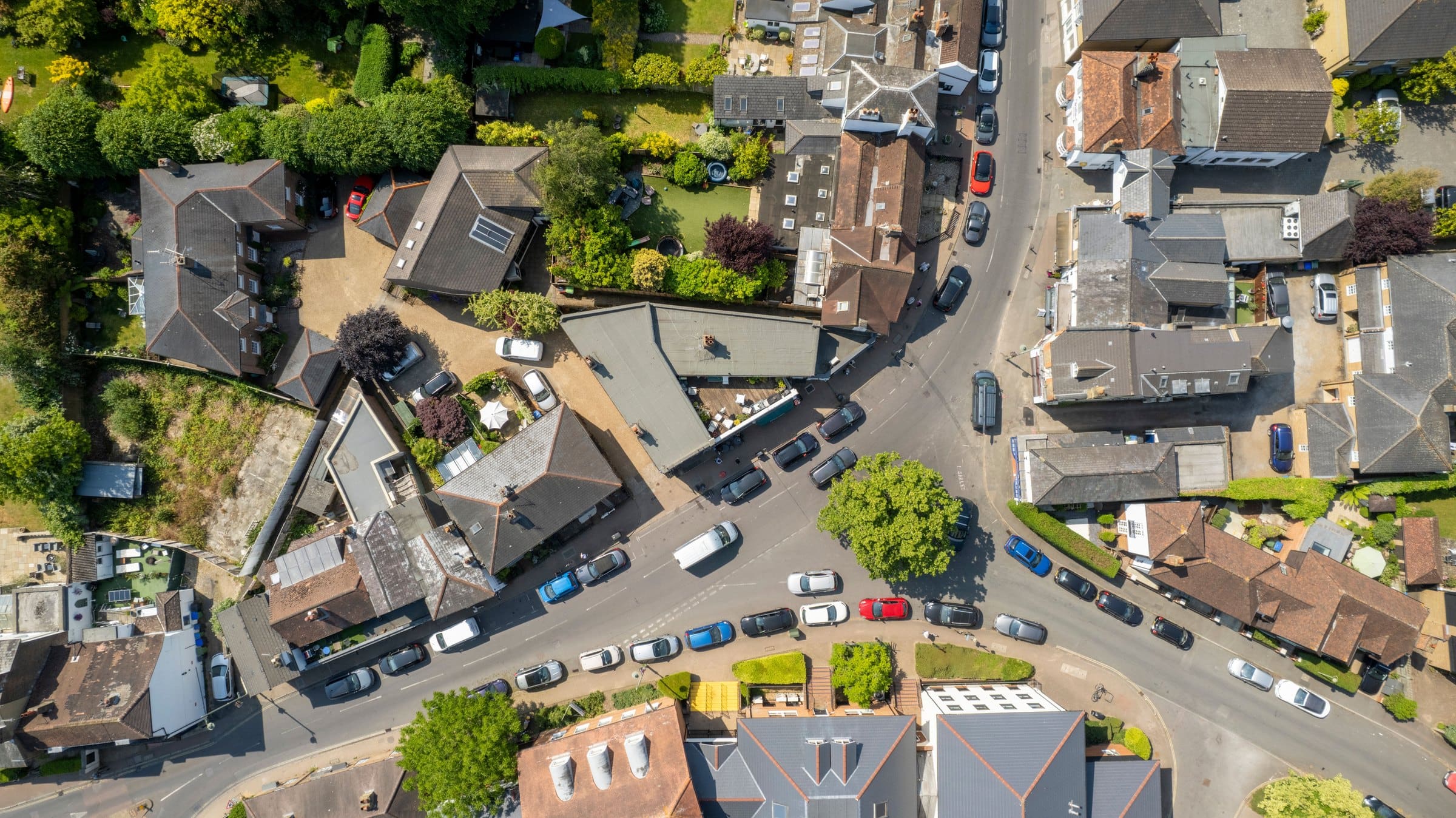
Exeter · planning and the grid
Planning and the grid in Exeter.
On a house in Exeter, solar panels on a pitched roof are permitted development provided they project no more than 0.2 m from the roof slope and sit no higher than the highest part of the roof, chimneys excluded. That holds inside the twenty conservation areas too: the conservation rule bites on panels fixed to a wall, balcony or roof enclosure fronting a highway, and on flat-roof arrays, which need prior approval there. A listed building needs consent regardless, and an Article 4 direction can remove the right on a named street. Our estimate flags the address’s status before anyone books a survey.
Exeter is in National Grid Electricity Distribution’s South West area, the company that was Western Power Distribution until 2022. An inverter of up to 3.68 kW per phase is connected under G98 and the network told afterwards; a larger inverter needs a G99 application before the install, which the installer makes. Most Exeter houses are single-phase, so that is the line that decides whether the paperwork is a notification or an application.
How many solar panels do I need?Exeter · how it works
How an estimate works for an Exeter address.
We have no office in Exeter and no van with our name on it, and that is the point: we don’t install, so we never need to sell you a system. The roof is read from aerial imagery, the array is sized to the house and the bill, and the price is given as a range with and without a battery, with every assumption shown. The survey is booked only if the numbers work for you, and the one installer we introduce is chosen for your roof from those who cover your postcode and hold all seven checks.
If an Exeter roof faces north and nothing else, or sits in the shade of a taller terrace, the estimate says so and we don’t take it further. That honesty is what an independent reading is for.
How we vet solar panel installersExeter · questions
Asked about solar panels in Exeter.
01Are solar panels allowed in Exeter’s conservation areas?
On a pitched roof, yes: roof-slope panels on a house are permitted development in a conservation area as elsewhere, provided they project no more than 0.2 m from the slope and sit no higher than the roof. The conservation rule restricts panels on a wall, balcony or roof enclosure fronting a highway and flat-roof arrays, which need prior approval; a listed building needs consent and an Article 4 direction can remove the right on a street. Exeter City Council lists twenty conservation areas and publishes a map; we check the address against it before the estimate.
02How much does a south-facing roof in Exeter generate?
The PVGIS model puts a south-facing 35° roof in Exeter at about 1,050 kWh per kWp a year, so a 6.2 kWp array on a clear south roof makes roughly 6,500 kWh. East or west faces make less, and shade from a chimney or a taller neighbour takes more. Our example estimate, an Exeter semi facing S–SW with some shade, comes to 5,400 kWh.
03How many Exeter homes already have solar panels?
Government figures count 5,911 solar PV systems in the Exeter local authority at the end of 2025, up from 3,057 at the end of 2020, with 27.02 MW of capacity between them. Against an estimated 52,500 households, that is roughly one home in nine.
04Which network operator covers Exeter, and does it matter?
National Grid Electricity Distribution’s South West area, formerly Western Power Distribution. It matters for inverter size: up to 3.68 kW per phase connects under G98 with the network notified afterwards; anything larger needs a G99 application before the work, which the installer makes.
05Do you have an office in Exeter?
No. We are an independent consultancy with no premises in the city and no installers of our own. The roof is read from above, the estimate is priced both ways, and one Exeter-covering installer is introduced once you want a survey. Not having a local showroom is what keeps the advice independent.
Where the figures come from
Every Exeter number on this page, with its source.
Read on the date shown. Yields are the PVGIS model, not a guarantee; counts are the government’s local-authority statistics, not ours.
- PVGIS 5.3 (EU JRC), one kilowatt-peak, 35° south, standard losses, Exeter · read 2026-10-06
- DESNZ, Renewable electricity by local authority 2014–2025 (LA sites and capacity, Solar PV) · read 2026-10-06
- HM Land Registry UK House Price Index, Exeter, July 2026 · read 2026-10-06
- Exeter City Council, Conservation areas · read 2026-10-06
- Exeter City Council, Net Zero Exeter 2030 Plan adopted · read 2026-10-06
Also read: solar panels in Plymouth, and where we work.
Keep reading
The rest of the service.
-
Your estimate
Your roof sized and priced from above
-
Battery storage
Priced both ways, side by side
-
The installer match
Seven checks, then one name
Estimate or survey
Start with a postcode.
Our desktop feasibility survey is £120 including VAT, with its fee and terms confirmed when you book. It’s the only thing you pay us: if you go ahead, the installer’s technical survey (£238.80 including VAT) is deducted from your installation price, and the installer pays us a referral fee.
We use these details only to send your estimate and arrange a survey. Privacy Policy
This form needs JavaScript switched on.
Or ring us free on 0800 593 0413