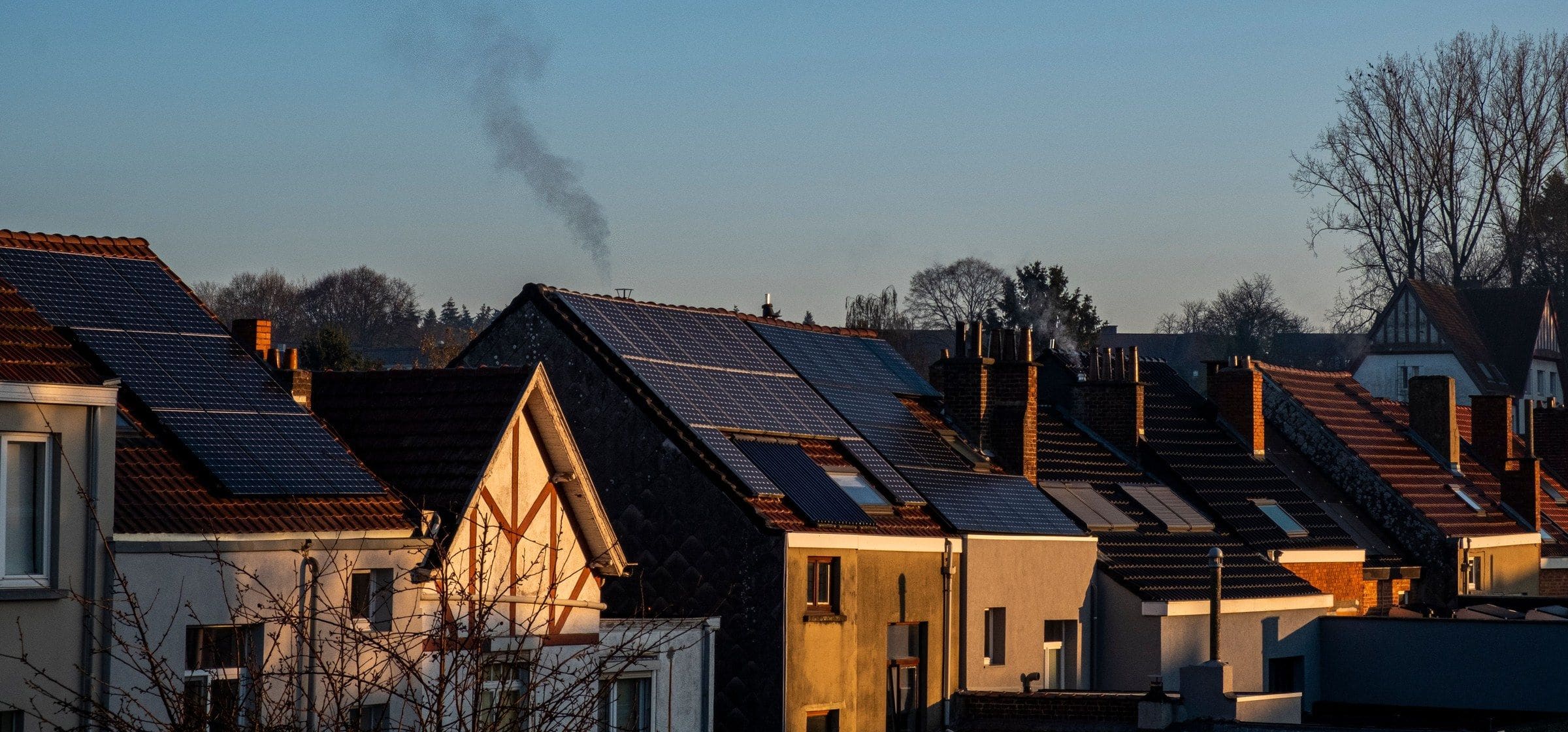



Ask three installers to quote for the same roof and you will get three different prices, sometimes thousands of pounds apart, for what looks like the same job. Homeowners read that as a sign that someone is lying. Usually nobody is. The quotes differ because the installers made different decisions about six things, and most of those decisions are never written down on the quote. This guide names the six, says which are legitimate reasons for a higher price, and shows how an independent estimate removes most of the variation before you ask anyone to quote.
One: how many panels they decided to fit
The first number on any quote is the system size, and it is a decision, not a fact. One installer sizes to your bill, one sizes to fill the roof, one sizes to the largest inverter they can fit under the G98 limit without an application. A roof that carries 14 × 445 W panels at 445 W is a 6.2 kWp system; the same roof quoted at ten panels is a smaller system at a lower price that will make less. Neither quote is wrong, but you cannot compare them until the system sizes match. Our guide on how many solar panels you need explains what the right number depends on.
Two: which panels and which inverter
A 445 W panel from one manufacturer and a 445 W panel from another can differ by a couple of hundred pounds a panel, with a longer product warranty, a better low-light performance or simply a bigger brand behind the dearer one. The inverter is the same story with bigger numbers: a string inverter, a hybrid inverter that can take a battery later, or optimisers on every panel for a shaded roof can move a quote by over a thousand pounds. A quote that names only “premium panels” and “a quality inverter” has hidden the single biggest reason it differs from the next one. Make, model and count, every time.
Three: whether a battery is in, out or priced separately
A battery roughly doubles the price of a small system and is often bundled into one quote and left out of another. Our example estimate prices a 6.2 kWp system at £7,200–£8,900 without a battery and £11,700–£13,400 with a 10 kWh one, so the battery alone is £4,500 on that roof. Two quotes that differ by about that much are probably not disagreeing about the solar at all. A good quote prices the battery as its own line so you can take it out and compare like with like; our solar battery cost page explains what that line should contain.
Four: the roof itself, and what the installer could see
Scaffolding, the roof covering and the electrics are where quotes written from a desk go wrong. Slate is slower to work than concrete tile, because each slate is lifted and flashed around the hook. A conservatory under the eaves or a roof over a narrow side return changes the scaffold. A consumer unit with no spare way needs work before a solar circuit can be added. An installer who has not seen the roof, the loft and the fuse box either guesses, pads the price to cover the guess, or quotes low and finds the extra at the survey. The guide to slate, tile and flat roofs covers what the covering changes.
Five: what is and is not included
Read the small lines. Some quotes include the scaffold, the DNO notification, the MCS certificate, the export registration and a bird-proofing kit. Others leave two or three of those to be added later, or to be done by you. A quote that is a few hundred pounds cheaper and excludes scaffolding is not cheaper. Our line-by-line guide to how to compare solar quotes lists what every quote should state and what is most often missing.
Six: the installer’s own costs and margin
The last reason is the one nobody puts on paper. A national company with a sales team, a call centre and finance partners has a cost base that a local MCS-certified firm with three vans does not, and the quote carries it. Neither is automatically better: the larger firm may offer stronger aftercare and the smaller one a sharper price. What matters is that you know which you are comparing, and that the price has been set against what the same system costs elsewhere.
Why “get four quotes” does not solve it
The standard advice is to collect three or four quotes and pick the cheapest. The sites that offer to find them for you pass your details to several installers at once, each of whom pays for the lead and then competes for the job. You end up with four phone calls, four surveys and four quotes built on four different sets of the six decisions above, and the work of making them comparable falls on you.
Four quotes for four different systems is not a comparison. One system, priced against the market, is.
An independent estimate reverses the order. The roof is read from aerial imagery first, so the system size, the panel count and the likely covering are fixed before any installer is involved. The price is given as a range with and without a battery, with every assumption shown, so the six decisions are made once, in the open. Then one installer is introduced, chosen for that roof from those who hold all seven of our checks, with their quote already set against what the same system costs elsewhere. That is what our solar panel quotes are: one system, one checked price, one name.
How to compare quotes you already have
If you have quotes on the table now, make them comparable before you judge them:
- Write down the system size, the panel make and model, the count and the inverter for each. If a quote lacks any of those, ask for it.
- Take the battery out of every quote that includes one, so you are comparing solar with solar.
- List what each quote includes: scaffold, DNO notification, MCS and export registration, bird-proofing, the consumer unit work.
- Note which installers have seen the roof, the loft and the fuse box, and which have not.
- Then, and only then, compare the price per kWp.
If you would rather not do that work, our solar panel calculator gives you a sized, priced, assumption-stated estimate for your own roof to set the quotes against.
What we do
We size the roof from above, price it both ways and show every assumption, so the six decisions are made once and in the open. We introduce one installer, chosen for your roof, with their quote already checked against the market. We don’t install, so we have no reason to quote high, and no reason to quote low and find the difference at the survey.